Don't drink and drive: risks, myths and how to get home
What alcohol does behind the wheel, the tricks that do not lower your blood alcohol level and how to plan your journey home before the first drink, including when you have a flight the next day.
Published on 9 August 2017 Updated on 1 November 2026 6 min read

Don't drink and drive: alcohol slows your reflexes, narrows your field of vision, impairs your judgement of distances and, above all, gives you a false sense of control, so someone who has been drinking is the worst judge of whether they can drive. No trick (coffee, water, a cold shower) gets rid of alcohol any faster; only time does. The only safe option is to decide before you go out how you will get back: a taxi, public transport or a driver who does not drink.
It is one of the most repeated road safety messages, and yet it is still needed. In this article we go over why, which myths are best forgotten and how to organise yourself so that the night out, the family lunch or the wedding ends well.
What alcohol does when you drive
Alcohol starts to affect the brain in small amounts, long before a person feels “drunk”. Behind the wheel, its effects show in:
- Reflexes. It takes longer to react to sudden braking, a pedestrian or a traffic light changing.
- Vision. The field of vision narrows (the so-called tunnel effect), it is harder to adjust to glare and distances and speeds are judged less accurately.
- Coordination. Manoeuvres we do without thinking, such as changing lanes or taking a bend, become less precise.
- Judgement. The feeling of confidence and the tendency to take risks increase: people drive faster and keep less of a safe distance.
- Drowsiness. Alcohol is a depressant. Combined with the tiredness of a long night, it multiplies the risk of falling asleep at the wheel.
What is more, the effect is not the same for everyone: it depends on weight, sex, whether you have eaten, tiredness, medication and how fast you drink. That is why reasoning like “a couple of small beers won't do any harm” is so unreliable.
Myths that do not lower your alcohol level
The liver eliminates alcohol at its own pace, and there is no way to speed it up. These popular remedies do not work:
- Coffee. It may perk you up a little, but the alcohol is still in your blood. The result is someone just as impaired and more confident.
- Drinking lots of water or having a cold shower. They help you feel better, not get rid of the alcohol.
- Eating at the end. Eating before and during slows absorption, but it does not cancel out what you have already drunk.
- “I'll wait an hour and I'll be fine.” The time needed varies a great deal depending on the person and how much they have drunk. After a night of drinking, it is easy to still test positive the next morning.
What the law says
In Spain, the General Traffic Regulations (Reglamento General de Circulación) set maximum alcohol levels in blood and in exhaled breath, and they are lower for new drivers and professional drivers than for everyone else. Exceeding them means a fine and the loss of points from your licence and, above certain levels or if you drive under the influence of alcohol, it is a road safety offence under criminal law. The DGT (Spain's traffic authority) has proposed lowering those limits in recent years, so it is wise to check the regulations in force; although the simplest thing is not to do the maths at all: if you are going to drive, no alcohol.
Plan the journey home before the first drink
The decision not to drive is much easier to make at the start of the night than at the end. Some ideas:
- Leave the car at home. If you know you are going to drink, do not even take it out.
- Choose a designated driver who does not drink all night, and take turns within the group.
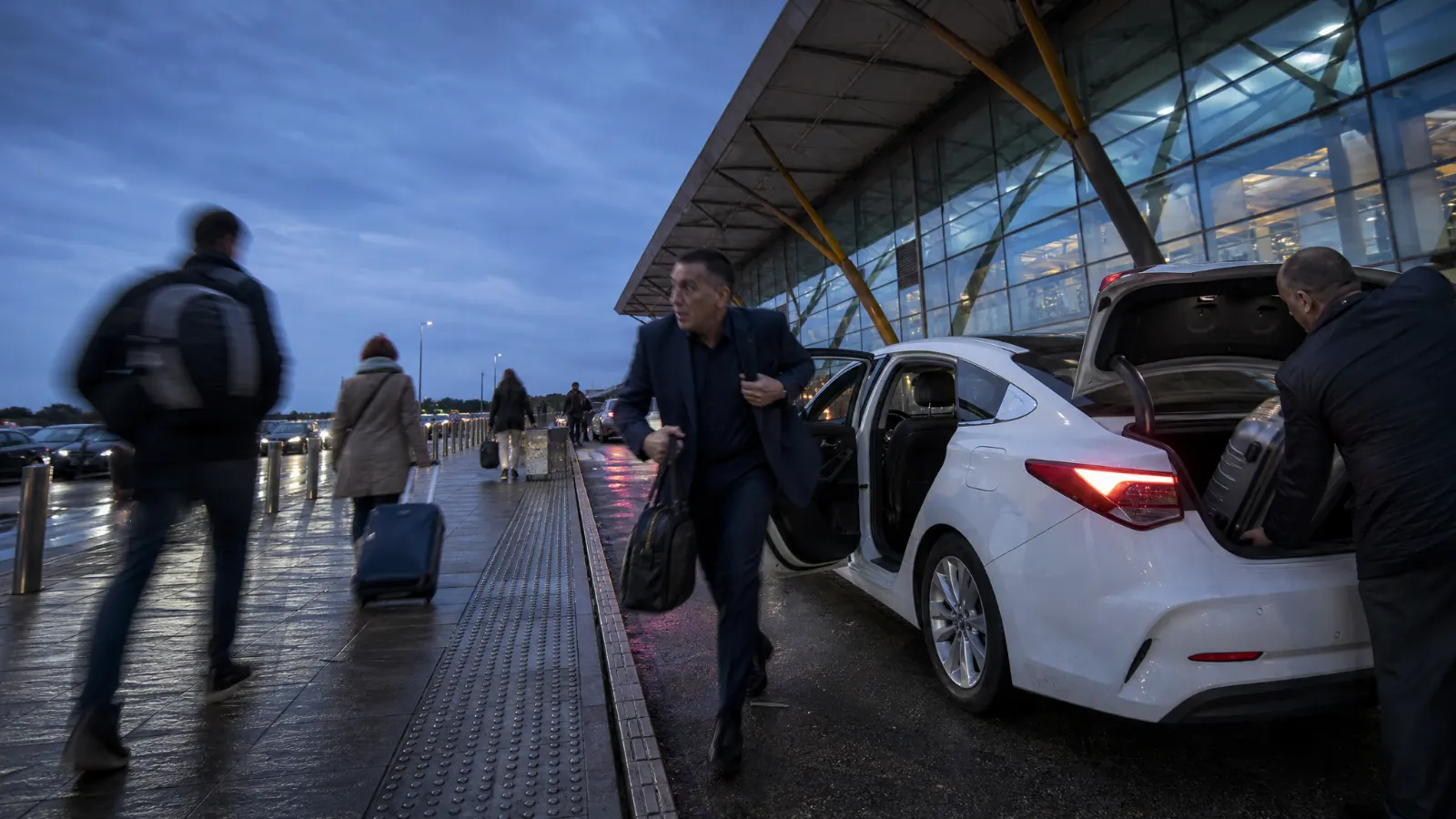
- Order a taxi. At any time, from the door of the restaurant or the bar. You can order a taxi on WhatsApp without having to call over the noise.
- Share it. If several of you are heading the same way, the taxi works out cheaper; we explain how in how to save money by sharing a taxi.
If you are thinking of a night out in the centre, you will find ideas in the best areas for a night out in Madrid, and in the best alternative to the car when drinking we compare the options for getting home.
Celebrations before a trip
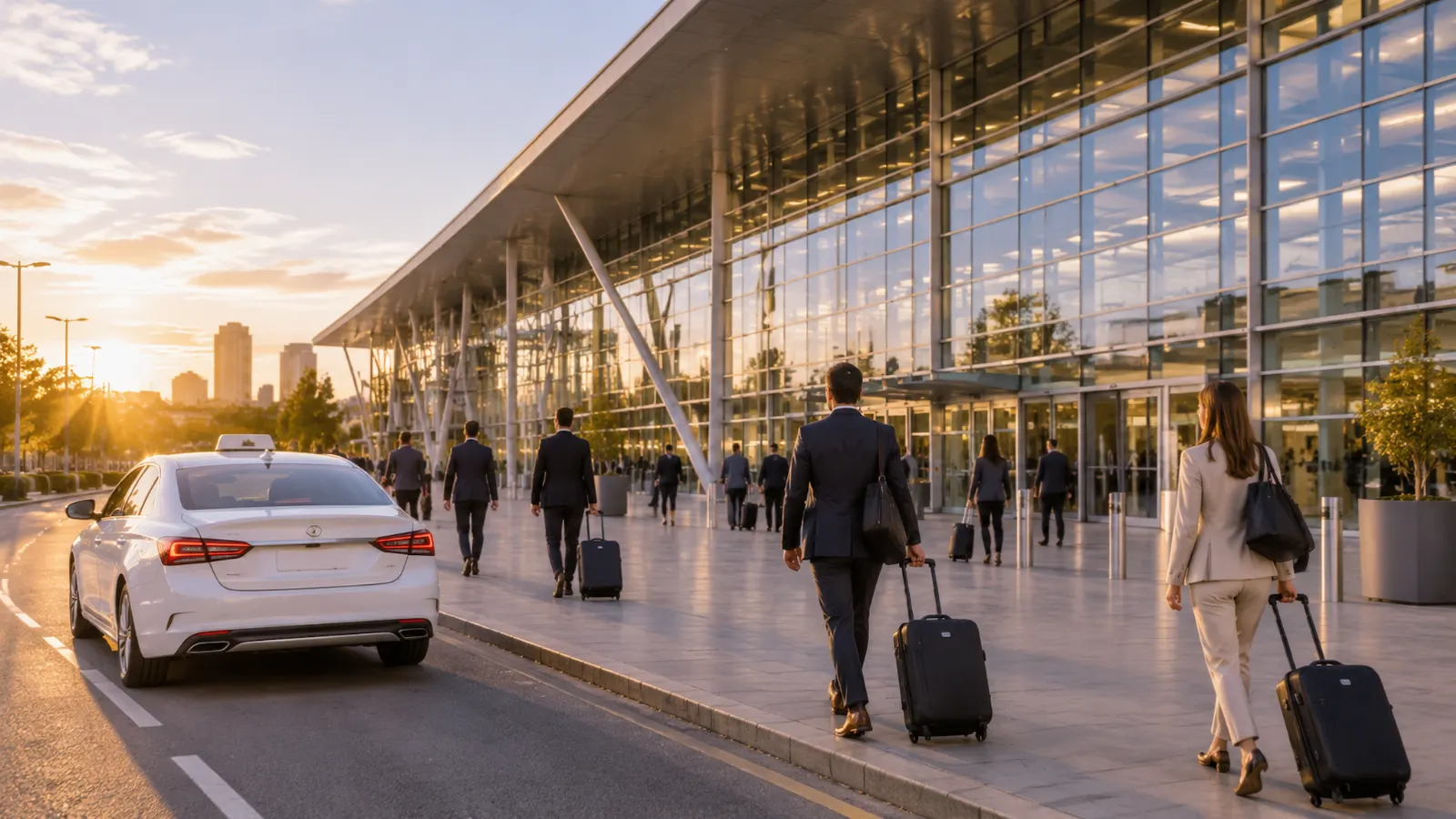
There are situations in which it is especially easy to give in to the temptation to take the car: the farewell dinner before you go away, a friend's wedding the day before you fly or a toast at the airport when you are reunited with your family. In all of them, a taxi solves the problem:
- If you are flying the next day, book your airport taxi the night before and forget about parking at Barajas. The price is fixed: from inside the M-30, €33.
- If you are a large group coming back from a celebration, a taxi with up to 7 seats takes you all together.
- If you are coming back from a trip and have had a drink on the plane, do not collect your car from the car park: it is another reason to choose a taxi over your own car, as we explain in drive or take a taxi to the airport.
You enjoy yourself, we do the driving
Official taxis 24 hours a day to get home or go to Barajas Airport, with a fixed price and booking in three steps.
Fixed fares
Airport taxi from your area
- Interior M-30 €33
- Torrejón de Ardoz €30
- Alcobendas €33
- San Sebastián de los Reyes Pueblo €33
- Alcalá de Henares €53
- Getafe €53
- Leganés €53
- Majadahonda €53
- Las Rozas de Madrid €58
- Móstoles €63
- Alcorcón €63
- Fuenlabrada €63
Need a taxi to the airport?
Instant fixed price. No sign-up.
- Journey
- When
- Your details
We can't find it on the list.
Call or message us and we'll give you a price straight away.
Terminal · Madrid-Barajas
Your fixed price
Passengers
Suitcases
Your fixed price
Booking received!
We'll confirm your booking by phone shortly. If it's for less than 2 hours from now, please call us directly.
Reference
Your fixed price