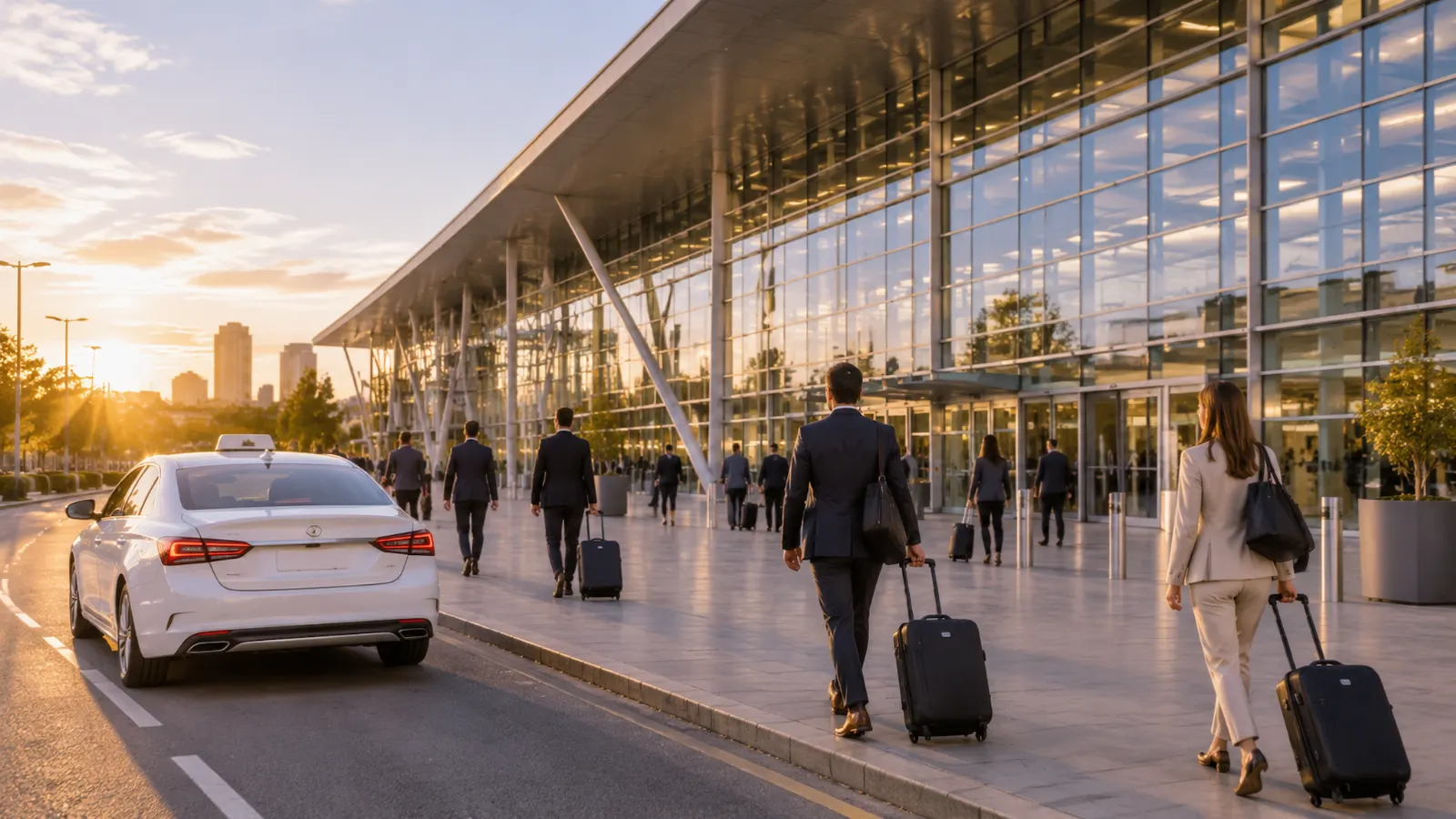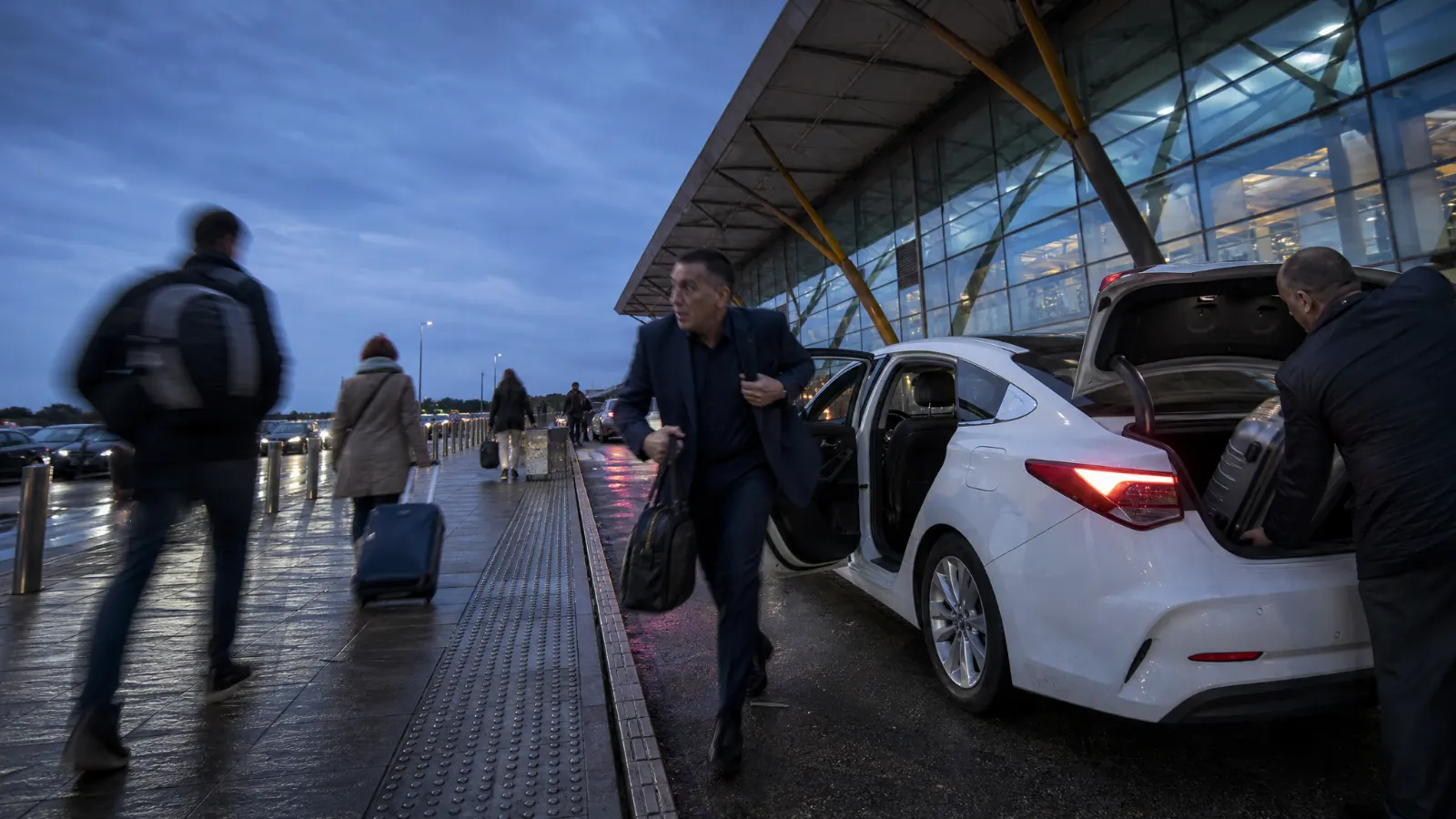
What will the future of taxis in Madrid look like? What has changed and six trends you can already see
From the mechanical meter and cash payment to booking by phone and fixed prices. What has already changed in Madrid’s taxis and where they are heading: cleaner cars, accessibility and automation.
Published on 13 January 2017 Updated on 1 November 2026 7 min read
The future of taxis in Madrid lies in ever cleaner vehicles, fully digital booking and payment, more journeys at a fixed price known in advance and a more accessible fleet. In the longer term, automated driving could change the trade, although today there is no realistic date for seeing driverless taxis on the capital’s streets. What does not change is the basis of the service: a municipal licence, accredited drivers and availability 24 hours a day.
Many of these trends are not in the future: you can already notice them when you get into a taxi in Madrid. That is why we start by reviewing what has already changed and then separate what exists from what is still a possibility.
What has already changed: yesterday, today and tomorrow
Until not so long ago, you found a taxi at a rank, by raising your hand or by calling a dispatch service; the price was shown at the end by a meter and paid in cash. Almost all of that has evolved, and the direction of change says a lot about what is coming:
| Aspect | Yesterday | Today | Where it is heading |
|---|---|---|---|
| Ordering a taxi | Rank, street or dispatch service by phone | Also website, apps and WhatsApp | More real-time information for the traveller |
| Knowing the price | At the end, on the meter | Meter or fixed price when booking | More journeys with a price known in advance |
| Paying | Cash | Cash, card, phone or online payment | Contactless payment as the usual option |
| Vehicle | Petrol and, later, diesel | Many hybrids and more and more electric cars | A mostly zero-emission fleet |
| Accessibility | Few options | Adapted taxis and 7-seater vehicles | Ordering the right vehicle with no hassle |
| Driving | The driver’s memory and a street map | Drivers with a municipal permit and GPS | More driver assistance; full autonomy with no date set |
Other things have much older roots than you might think. The municipal authority limiting licences and setting fares long predates the car; the taxi meter was born so that passengers would not have to negotiate the price, and the common livery of taxis responds to an age-old concern: telling the authorised service apart from one that is not. If you are interested in the full story, you will find it in the history of taxis in Madrid.
A cleaner, more accessible taxi
Ever cleaner vehicles
Madrid has low-emission zones and municipal rules that have pushed taxis towards vehicles with an ECO or Zero environmental label. Diesel, for years the typical taxi fuel, has been giving way to hybrids, gas and electric cars. Today it is common to get into a hybrid taxi, and you see more and more electric ones; over time, the trend is for the fleet to become mostly zero-emission as range and the charging network improve. If you want to know what travelling in one is like, we tell you in electric taxis.
A more accessible and inclusive taxi
Taxis adapted for wheelchair users, 7-seater taxis for families and groups, child seats on request and the option of travelling with pets are part of a service increasingly designed for all kinds of travellers. The challenge is to make finding the right vehicle as easy as ordering a standard taxi.
Booking, payment and price: all before you get in
Booking and paying from your phone
Hailing a taxi in the street is still possible, but more and more journeys are ordered from a phone: apps, websites or messaging. We accept bookings online, by phone and in writing when you order your taxi on WhatsApp. Payment has gone digital too: card, phone or online payment when booking.
The trend points to travellers having all the information before they get in: who is picking them up, when the vehicle will arrive and how much they will pay. For airport journeys this translates into something very specific: booking in advance, giving the flight number so the terminal and meeting point can be confirmed, and receiving confirmation without having to call. It is the way of working we already apply and which, predictably, will become the norm across the sector.
More fixed prices and less uncertainty
Many travellers prefer to know the amount before setting off, and a fixed price is the modern answer to the old question of how much the journey will cost. In our service we apply it across the whole Madrid region, with a price by area that does not depend on traffic and is the same in both directions (inside the M-30: €33); you can check the other areas on the fares page. It is likely that prices known in advance will gain ground over the meter on booked journeys.
Platforms and automation
Coexisting with VTC and platforms
Taxis and VTC (private-hire vehicles booked through an app) share Madrid’s streets today under different rules. The regulation of that coexistence has changed several times and will probably keep being adjusted. For the traveller, the key will be understanding what each one offers; we sum it up in what sets a taxi apart from a VTC.
Automation, in the long term
Robotaxis already operate in some cities around the world, always in designated areas. In Spain, automated driving is at the stage of authorised trials, and its arrival in a public service like Madrid’s taxis would require major regulatory changes, as well as answers to technical, legal and employment questions that are still open. We explain it in detail in driverless cars.
What is not going to change
However far technology advances, the taxi will remain a regulated public service: licensed vehicles, fares approved by the authorities, drivers who know the city and availability at any hour. It will go on doing what the old hackney carriage did: taking you door to door with a professional at the wheel. For anyone travelling to the airport with suitcases, in the early hours or with children, that help still makes all the difference.
And if what you need is a taxi now, you can book your transfer to Barajas in three steps.
The taxi you know, with today’s advantages
Book online, by phone or on WhatsApp, pay however you prefer and travel to any Barajas terminal in an official taxi at a fixed price by area.
Fixed fares
Airport taxi from your area
- Interior M-30 €33
- Torrejón de Ardoz €30
- Alcobendas €33
- San Sebastián de los Reyes Pueblo €33
- Alcalá de Henares €53
- Getafe €53
- Leganés €53
- Majadahonda €53
- Las Rozas de Madrid €58
- Móstoles €63
- Alcorcón €63
- Fuenlabrada €63
Need a taxi to the airport?
Instant fixed price. No sign-up.
- Journey
- When
- Your details
We can't find it on the list.
Call or message us and we'll give you a price straight away.
Terminal · Madrid-Barajas
Your fixed price
Passengers
Suitcases
Your fixed price
Booking received!
We'll confirm your booking by phone shortly. If it's for less than 2 hours from now, please call us directly.
Reference
Your fixed price