Madrid taxi fares: tariff 1, tariff 2, special fares and supplements
When tariff 1 applies and when tariff 2 does, what the airport flat fare and the minimum fare are, which supplements exist and what you can never be charged.
Published on 17 July 2016 Updated on 1 November 2026 9 min read
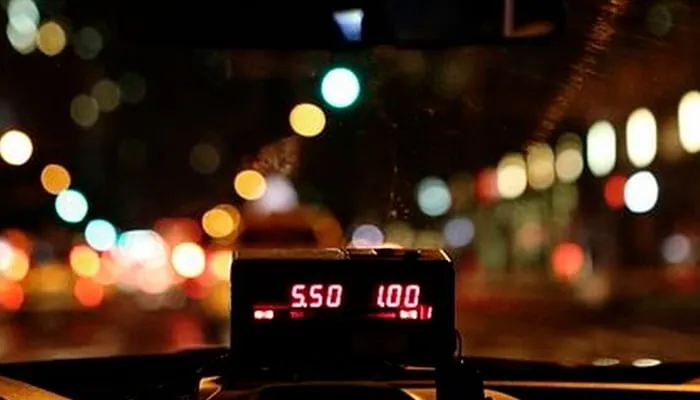
There are two Madrid taxi fares for metered urban journeys: tariff 1, for weekdays during the daytime, and tariff 2, which is more expensive, for nights, Saturdays, Sundays and bank holidays. On top of these come the special fares, which replace the meter in specific cases (such as the flat fare between the airport and inside the M-30 or the minimum fare from the terminals), the intercity fare for journeys outside the joint service area, and supplements, amounts added only in strictly defined circumstances. All the amounts are approved by Madrid City Council, reviewed periodically and listed in the official table that every taxi has on display.
In this guide we explain how each element works without reproducing figures that change with every update: for the current year's amounts, the reference is always the City Council's regulations in force.
Tariff 1 and tariff 2: when each one applies
Switching from one tariff to the other depends on the day and time of the journey, not on the route or the driver. Broadly speaking, this is how it works:
| Tariff 1 | Tariff 2 | |
|---|---|---|
| Days | Monday to Friday, working days | Every day |
| Time band | Daytime (usually from 7:00 to 21:00) | Night-time (the remaining hours) |
| Saturdays, Sundays and bank holidays | Does not apply | All day |
| Relative price | The cheapest | Higher amounts for every element |
The bank holidays that count are national ones, those of the Madrid region and local ones in the municipality. If a journey starts in one time band and ends in another, the meter applies the corresponding tariff according to its official settings; it is not something the driver decides.
What each tariff is made up of
Both tariffs have the same structure and only the amounts change: an initial charge, the amount the meter starts at; a price per kilometre, added while the taxi is moving normally; and a price per hour, which the device counts instead of distance when the car is moving very slowly or stopped. That is why a short journey at rush hour can cost more than a longer one at midnight. The formula, with a step-by-step example, is in how taxi fares are calculated in Madrid.
How to tell which tariff you are being charged
There is no need to memorise times. The taxi itself gives you the information in three places:
- The illuminated roof sign, which shows the number of the active tariff when the taxi is occupied.
- The meter display, which shows the current tariff and the running total, always in view of the passenger.
- The fares table displayed inside, with all the tariffs and supplements in force.
If on a Tuesday at midday you see it showing the night tariff, mention it there and then: it may be a local bank holiday you were not aware of.
Special fares: the airport and intercity journeys
Some journeys are not charged at tariff 1 or 2 even though the taxi has a meter. These are the cases that cause the most confusion, especially with Barajas.
The flat fare between the airport and inside the M-30
Journeys between any terminal and a point inside the M-30 ring road, in either direction, have a flat fare that does not depend on the meter and to which no supplement is added. Old versions of this article mentioned €30, a figure that is now out of date. Exactly what it covers and how it differs from a fixed price with a booking is explained in the €33 airport fare.
The minimum fare from the terminals
When a taxi leaves the airport rank for a nearby destination outside the M-30, a minimum amount applies: if the meter does not reach it, you pay that minimum; if it goes over, you pay what it shows. It compensates for the long waits taxis have in the terminal queue. The different ways of paying for a taxi to Barajas, compared, are in our guide to airport fares.
The intercity fare
Urban tariffs apply within the joint service area, which groups Madrid city and several surrounding towns. If the journey goes outside that area, towards the mountains, the south-east or another province, the intercity fare applies, regulated by the Madrid region, with its own amounts per kilometre. It is the journey where the metered price is hardest to predict; for getting to the airport from a town, our page on taxis to towns in the Madrid region gives the fixed price for each one.
Madrid taxi supplements
A supplement is a fixed amount added to the metered fare when a circumstance provided for in the official table arises. The driver does not decide them and only those listed in the current table can be charged. Madrid's tables have traditionally included supplements of this kind:
| Type of supplement | When it has applied | Notes |
|---|---|---|
| Stations | Departures from the main train and bus stations | For example, Atocha or Chamartín |
| Trade fair grounds | Journeys starting at IFEMA | Common on trade fair days |
| Airport | Journeys to or from the airport and outside the M-30 | Never on the flat fare to inside the M-30 |
| Special nights | Christmas Eve and New Year's Eve, in the night-time band | Added to the night tariff |
The specific list, the amounts and the conditions change from one year to the next, so the reference is the table displayed in the taxi. If you are leaving a conference at the trade fair grounds or arriving by train at a major station, check in it whether any supplement applies to your journey.
What is not a supplement
Knowing what cannot be added is just as important as knowing what can. These items should not appear as extras on your receipt:
- Luggage. Suitcases carry no surcharge; the only limit is the space in the boot.
- Assistance dogs. They travel free and the driver cannot refuse to take them.
- Loading time. If the meter is already running while you load your suitcases, the tariff's time counts, but there is no supplement for it.
- Made-up charges. A “card surcharge”, a “per-passenger supplement” or a “cleaning fee”: if it is not in the official table, it cannot be charged.
How to check your receipt and pay the right amount
At the end of the journey you can always ask for the receipt, which is the document that proves what you have paid. To check that everything adds up, look at these points:
- The tariff applied, which must match the day and time of the journey.
- The supplements, which must be in the current table and apply to your journey.
- The licence number, which identifies the taxi if you need to complain.
- The total amount, which must match the meter on arrival, plus any supplements.
If you are not satisfied, we explain what you are entitled to in the article on taxi passengers' rights. And some tips to avoid paying over the odds:
- If you can choose the time, do: the same journey costs less on tariff 1 than on tariff 2.
- Give your route if you know it: the passenger can ask for a specific route.
- Pay by card if you also want a bank record of the payment.
- For the airport, use a fixed price: from outside the M-30 the meter can shoot up in traffic. With an airport taxi booking you know the amount before you set off.
From inside the M-30, the Inside M-30 fare costs €33 to any terminal at any hour; the other areas are in our airport taxi fares.
To the airport, with no fares to decipher
Book your taxi to Barajas with a fixed fare by area: the amount you see when booking is what you pay, with no supplements and at any hour.
Fixed fares
Airport taxi from your area
- Interior M-30 €33
- Torrejón de Ardoz €30
- Alcobendas €33
- San Sebastián de los Reyes Pueblo €33
- Alcalá de Henares €53
- Getafe €53
- Leganés €53
- Majadahonda €53
- Las Rozas de Madrid €58
- Móstoles €63
- Alcorcón €63
- Fuenlabrada €63
Need a taxi to the airport?
Instant fixed price. No sign-up.
- Journey
- When
- Your details
We can't find it on the list.
Call or message us and we'll give you a price straight away.
Terminal · Madrid-Barajas
Your fixed price
Passengers
Suitcases
Your fixed price
Booking received!
We'll confirm your booking by phone shortly. If it's for less than 2 hours from now, please call us directly.
Reference
Your fixed price